
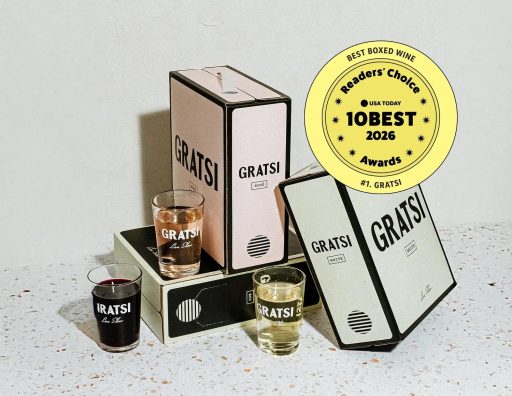
Boxed Wine That Actually Earns a Spot on Our Table in 2026
Let’s be honest, “boxed wine” doesn’t exactly scream fine dining. For a lot of us it brings back memories of questionable bag-in-box stuff from our younger days. That’s why we were slow to try the new wave of premium boxed wines. Then we gave Gratsi a shot, and we’ve been pouring it ever since.
Here’s the quick version. My dad (Ken) and I have had Gratsi on several occasions over the years, and we both think it’s pretty dang good. Is it as good as the wine we get from the wine clubs we’re members of? No. Not even close, and it’s not trying to be. But for an easy-drinking table wine that you can pour without opening a bottle every night, it’s pretty darn good, and the price per glass is hard to argue with.
Gratsi at a Glance
- What it is: Premium boxed table wine inspired by European regions
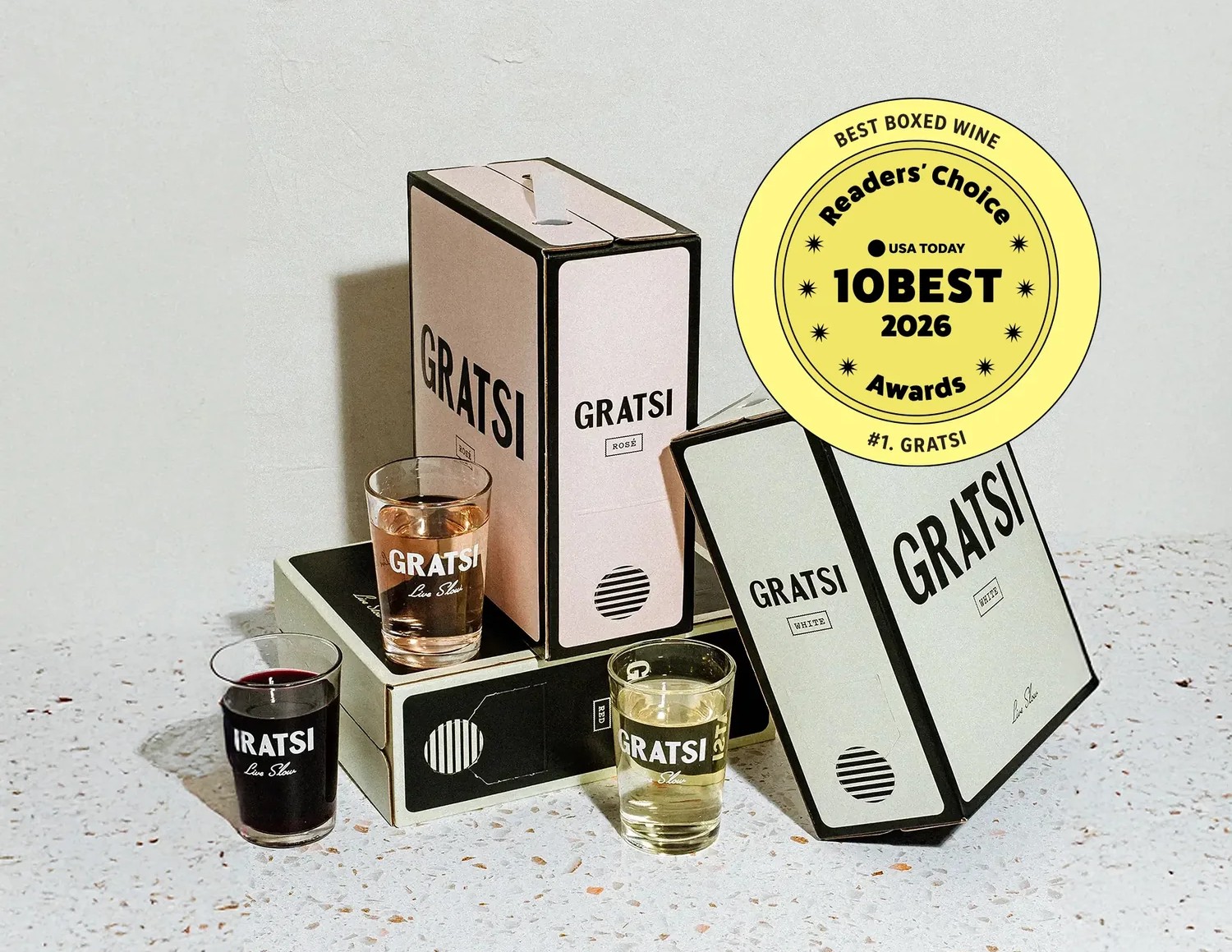
- Box size: 3 liters, equal to 4 bottles or roughly 20 glasses
- Lineup: Red, White, Rosé, plus a Provence-style sparkling rosé sold in 750 ml bottles
- Price: $50 for a single box (about $12.50 per bottle equivalent). Buy more boxes and the price per box drops. At last check, 4 boxes brought it to $34 a box, or about $8.50 per bottle
- ABV: Roughly 11.5% to 13% depending on the wine
- Freshness: The brand says an opened box stays fresh for 30 days or more thanks to the bag inside
- Subscription: Optional, with an extra discount and delivery every 15 to 75 days
Why We Gave Boxed Wine Another Shot
Table wine is meant to be dry, fruity, easy to drink, and cheap enough that you don’t think twice about pouring a second glass or using some in the pan. Boxes make sense for that job. The bag inside keeps air out, so a box lasts weeks instead of the day or two you get from an opened bottle. Boxes are also lighter and cheaper to make than glass, which is where some of the savings come from. Gratsi says its packaging creates much less waste than the same amount of wine in glass.
The $50 sticker price can look steep at first glance, but remember that a 3-liter box equals four bottles. That works out to $12.50 a bottle, and less if you buy several boxes at a time. As long as you can get through 3 liters in a month (we can), it’s a solid value.
What We Thought of Each Wine
Gratsi has shifted its lineup over the years. It started with US-grown grapes and now focuses on blends inspired by Old World regions, including France and Italy. We’ve tried the current style, and here’s how it shakes out.
Gratsi White
The White is a French blend, mostly Sauvignon Blanc with a little Chardonnay. It’s pale lemon in color, with aromas of pear, yellow apple, peach, grapefruit, lemon, and a hint of wet stone. On the palate it’s dry, crisp, and fruit-forward, with citrus, apple, and pear flavors and a nice acidity that keeps it fresh.
This is our go-to Gratsi. It’s great with fish, perfect for a happy-hour glass, and we’ve used it in the kitchen as much as in the glass (sometimes both at the same time).
Gratsi Red
The Red is a big blend of grapes from France and Sicily: Malbec, Merlot, Cabernet Sauvignon, Cabernet Franc, Grenache, Syrah, and Nero d’Avola. That’s a lot going on, so it’s hard to pin down one signature flavor. It’s deep ruby in color, with black cherry, blackberry, cranberry, clove, and a touch of tobacco and dried leaves. It’s dry, with good acidity, smooth tannins, and a long finish. At about 13% ABV, it’s the strongest of the bunch.
It worked well with pasta, meat-heavy dishes, and even Asian takeout. We also used a good amount of it in a coq au vin and didn’t feel one bit guilty about it.
Gratsi Rosé
The Rosé comes from the south of France, a blend of Malbec, Gamay, and Merlot. It’s a medium pink-orange with red cherry, strawberry, raspberry, and watermelon notes, with a little wet stone. Dry and bright, it’s the lightest of the three at the lower end of the ABV range. Easy to sip on a warm afternoon.
Gratsi Sparkling Rosé
The newest addition is a Provence-style sparkling rosé made mainly from Grenache and Syrah. It comes in 750 ml bottles instead of the box, and starts at around $15 a bottle. We haven’t tried this one yet, but it’s on our list.
Our Verdict: Complex? No. Delicious? Yes.
Are these wines complex? Not really. Are they delicious and easy to drink? Absolutely. The acidity is good, the fruit is up front, and there’s very little oak, so they play well with almost any dish. Our 3 liters never last long.
We also had fun with them beyond sipping. We’ve made giant pitchers of sangria with the White and barely put a dent in the box. We’ve cooked with both the White and the Red. And having a box open in the fridge means a glass is always an easy call, so don’t be surprised if your wine consumption goes up. Ours sure did.
Who Gratsi is for: Anyone who wants everyday table wine at a fair price, folks who cook with wine, households that go through a lot of wine, and anyone hosting a crowd.
Who might want to pass: If you want complexity, aging potential, or a wine that makes you stop and think, look elsewhere. That’s where wine clubs shine.
How Gratsi Compares to Wine Clubs
Here’s where we put on our WineClubs.net hats. Gratsi isn’t a wine club in the traditional sense, but its optional subscription gives you boxes on a schedule (every 15 to 75 days) with an extra discount, and you can cancel anytime. Think of it as your everyday pour.
Our wine club memberships are our special-occasion and discovery wines, the bottles from small producers that you can’t find on the grocery shelf. Gratsi is the weeknight bottle you grab without thinking about it. Many wine lovers do both. If you’re looking for the clubs worth joining, take a look at our list of the best wine clubs.
Frequently Asked Questions
How much does Gratsi cost?
A single 3-liter box is $50, or about $12.50 per bottle equivalent. Buying multiple boxes brings the price per box down, and subscribing adds a further discount. Prices change, so check Gratsi’s site for current pricing.
How long does a Gratsi box last once opened?
Gratsi says its wine stays fresh for 30 days or more because the bag keeps air out. That’s the company’s claim, but it matches our experience that a box lasts far longer than an opened bottle.
How many glasses are in a box?
A 3-liter box equals four bottles, or about 20 five-ounce pours.
Where is Gratsi wine from?
The current blends are inspired by Old World regions, with grapes from France and Italy.
Is Gratsi a wine club?
Not exactly. It sells boxes directly and offers an optional subscription with discounts, but it isn’t a curated wine club like the ones we review.
Is Gratsi better than the wines from wine clubs?
In our opinion, no. The wines from the clubs we belong to are a step up. But Gratsi is a great everyday table wine at a price that’s hard to beat.
Disclosure: We bought our Gratsi ourselves. We did not receive free samples or any payment for this review. All opinions are our own.