
Kentucky is bourbon country first — but it’s also home to nearly 70 commercial wineries, a growing wine trail scene, and a wine history that goes back further than almost anywhere else in the country. After 30+ years of visiting, reviewing, and tasting our way around wine regions everywhere, here’s everything we know about Kentucky wine country.
Trying to figure out if wine can be shipped to your Kentucky address? See our Kentucky wine delivery guide.
Kentucky Wine Country: History, Wineries & Wine Trails
Here’s a fact that surprises most people: Kentucky is home to the first commercial vineyard in the United States. Jean-Jacques Dufour, a Swiss immigrant, planted it near the Kentucky River in Jessamine County in 1799, and by the late 1800s Kentucky was the third-largest grape and wine producer in the country. Prohibition wiped most of that out, but the industry has quietly rebuilt itself since the mid-1990s, and the Commonwealth now counts close to 70 small-farm wineries — supported by the state’s “Kentucky Proud” buy-local program, which promotes homegrown food and drink, wine included.
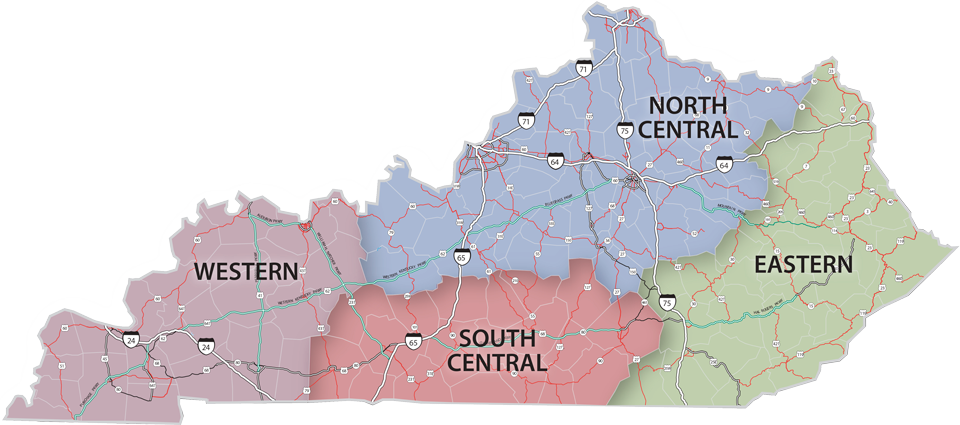
Most of the action is clustered into a few regions:
- Central Kentucky / Bluegrass region (Lexington, Midway, Frankfort) — home to well-known names like Equus Run Vineyards, Talon Winery, and Prodigy Vineyards, set against the same horse-country scenery Kentucky is famous for.
- Northern Kentucky (Covington/Rabbit Hash area) — closer to Cincinnati, with its own wine trail and tasting circuit, including Camp Springs Vineyard and Verona Vineyards.
- Western Kentucky — home to the Western Kentucky Wine Trail, including Purple Toad Winery in Paducah and Bluegrass Vineyard.
- Bullitt County’s Wine & Whiskey Trail — a hybrid trail that pairs wineries with nearby bourbon stops, a very Kentucky combination, including Brooks Hill Winery, Forest Edge Winery, and Wight-Meyer Vineyard & Winery.
Kentucky Winery Directory
Here’s a broader list of small-farm wineries and vineyards operating around the Commonwealth. Kentucky’s wine scene is made up mostly of small, family-run operations, so hours and even ownership can change — we’d always recommend calling ahead or checking a winery’s own site before making the drive.
- Highland Winery
- Three Horses Vineyard + Winery
- 12 Mile Creek Winery & Vineyard
- Jesters Winery
- Bullitt’s Winery & Bistro
- Arbor Stone Vineyards
- Schoolyard Winery
- Bruners Farm & Winery
- Verona Vineyards at Rabbit Hash
- Echo Valley Winery
- Brianza Gardens & Winery
- Atwood Hill Winery
- Baker-Bird Winery
- Black Barn Winery
- Broad Run Vineyards & Winery
- Brooks Hill Winery
- Camp Springs Vineyard & Winery
- Castle Hill Winery
- Chateau Du Vieux Corbeau Winery
- Chrisman Mill Vineyards & Winery
- Christianburg Farms Vineyard & Winery
- Chuckleberry Farm Winery
- Elk Creek Vineyards
- Equus Run Vineyards & Winery
- First Vineyard
- Forest Edge Winery
- Generation Hill Winery
- Grimes Mill Winery
- Harkness Edwards Vineyards
- Hamon Haven Winery
- Heritage at Kentuscany
- Horseshoe Bend Vineyards
- Jean Farris Winery & Bistro
- Lovers Leap Vineyards & Winery
- McIntyre’s Winery & Berries
- MillaNova Winery
- Old 502 Winery
- Prodigy Vineyards & Winery
- Redman’s Farm Winery
- Rising Sons Home Farm Winery
- River Valley Winery
- Rose Hill Farm Winery
- Seven Wells Vineyard & Winery
- Smith-Berry Vineyard & Winery
- Springhill Winery
- StoneBrook Winery
- Talon Winery & Vineyards
- The Little Kentucky River Winery
- Verona Vineyards
- Wight-Meyer Vineyard & Winery
- Wildside Winery
- Bluegrass Vineyard
- Carriage House Vineyards
- French Fort Vineyards
- Green Palace Meadery
- Cave Valley Winery
- Cave Hill Winery
- Cedar Creek Vineyards
- Crocker Farm Winery
- Lake Cumberland Winery
- Reid’s Livery Winery
- Sinking Valley Vineyard & Winery
- Up the Creek Winery
- Farmer and Frenchman Winery
- Boucherie Vineyards & Winery
- Eddy Grove Vineyard
- Misty Meadow Winery
- Purple Toad Winery
- White Buck Vineyards & Winery
The Kentucky Wine Sweetness Scale
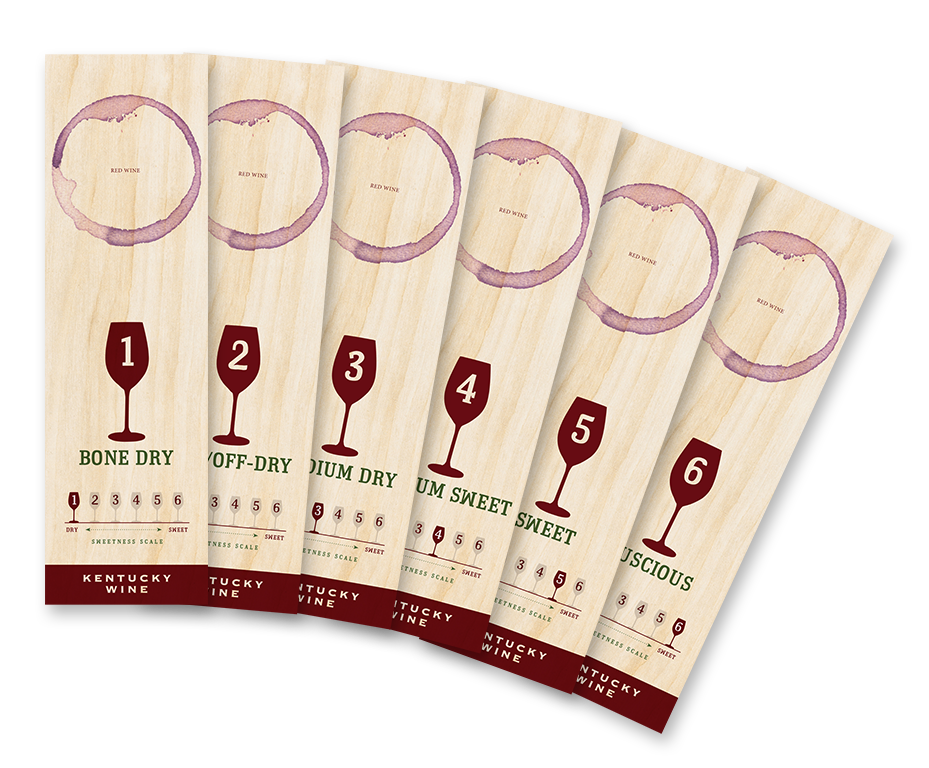
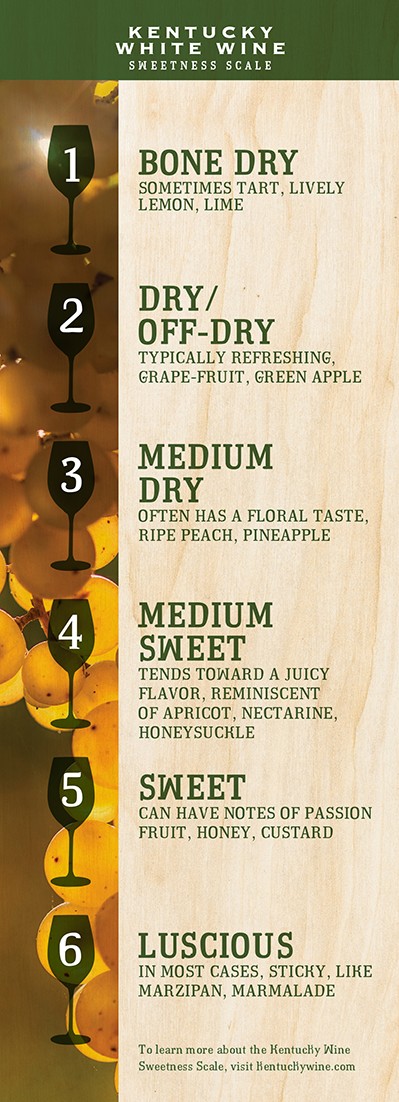
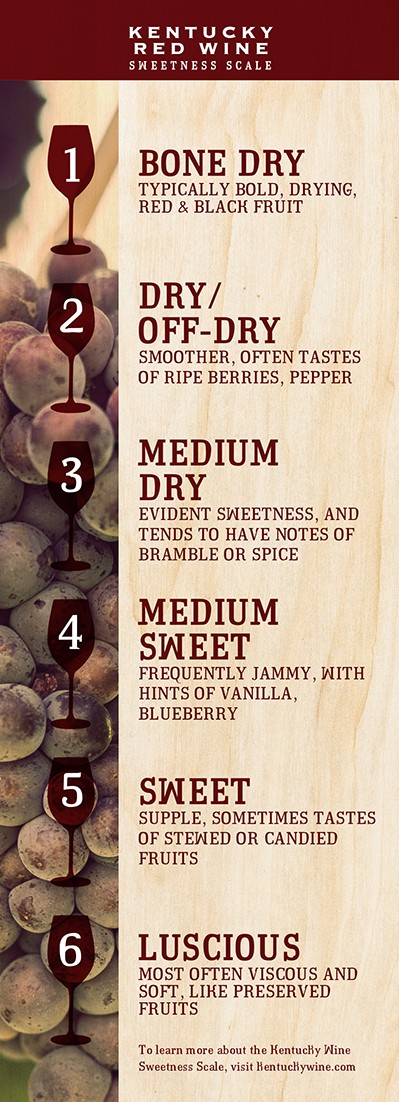
One thing Kentucky wineries got right early: a shared sweetness scale. Because Kentucky’s climate favors French-American hybrid and native grape varieties (Vidal Blanc, Chambourcin, Chardonel, and the like) rather than classic vinifera, a lot of the state’s wines don’t map neatly onto what “dry” or “sweet” means for a Napa Cab or a Chianti. Two wineries can both make a Vidal Blanc, and one can be bone dry while the other is dessert-sweet.
To solve that, Kentucky’s wine industry adopted a standardized 1-to-6 sweetness scale, based on residual sugar and adjusted for acidity, that many of the state’s wineries print right on the label:
- 1 — Bone dry
- 2–3 — Dry to off-dry
- 4 — Semi-sweet
- 5–6 — Sweet to lusciously sweet
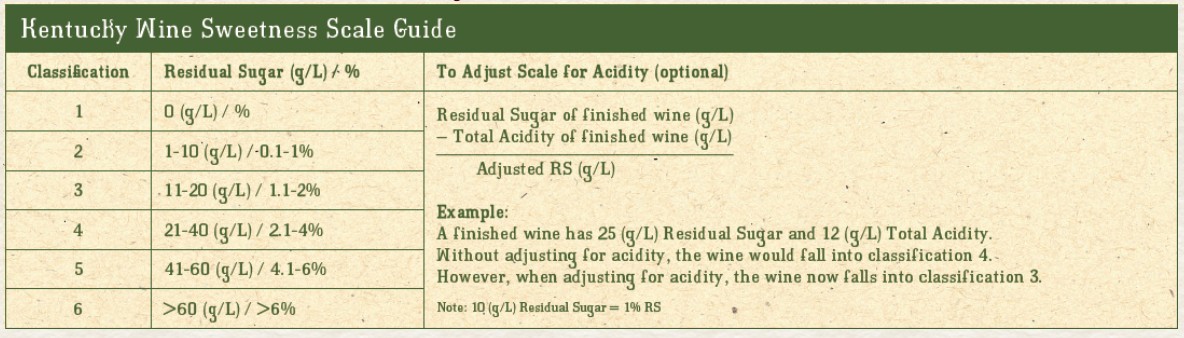
If you’re new to Kentucky wine, checking the label for this number is a much faster way to know what you’re getting than guessing from the grape name alone.
Kentucky Commonwealth Commercial Wine Competition & the Commissioner’s Cup
Each year, the Kentucky Department of Agriculture and the Kentucky Winery Association run the Kentucky Commonwealth Commercial Wine Competition, judged by industry professionals from around the country. Gold-medal wines made from at least 75% Kentucky-grown fruit become eligible for the Commissioner’s Cup — the state’s top honor, awarded in categories like Dry Red, Dry White, Rosé/Blush, Sweet/Dessert, and Boutique (small-production) wine. It’s a good shortcut if you’re wine shopping in Kentucky and want a quality signal: a Commissioner’s Cup medal on the shelf means that bottle beat out most of what the state produced that year.
Kentucky Wine Festivals
Kentucky’s wine festivals are seasonal and mostly regional rather than one single statewide event, so timing and location shift from year to year. If you’re searching for a specific festival, check directly with the host winery or trail association for current dates, since these tend to be scheduled well in advance and sell out.
Bringing Kentucky Wine (and Everything Else) Home
If you love what Kentucky’s wineries are doing but want more variety delivered to your door regularly, a wine club is the easiest way to keep good wine in the house between visits. We’ve reviewed and rated the wine clubs we recommend most, based on wine quality, value, and overall experience.
Kentucky Wine Videos
Kentucky Wine FAQ
What’s the best-known Kentucky wine region?
Central Kentucky’s Bluegrass region, thanks to its concentration of wineries and its overlap with horse country scenery.
What does the number on a Kentucky wine label mean?
That’s the Kentucky Wine Sweetness Scale — a 1 (bone dry) to 6 (very sweet) rating many of the state’s wineries use so shoppers can gauge sweetness without opening the bottle.
How old is Kentucky’s wine industry?
Older than you’d think — the first commercial vineyard in the U.S. was planted in Jessamine County, Kentucky, in 1799.
What is the Commissioner’s Cup?
Kentucky’s top annual wine award, given by the state’s Department of Agriculture to gold-medal wines made from at least 75% Kentucky fruit.
Can wine be shipped to a Kentucky address?
Yes, with some restrictions — see our Kentucky wine delivery guide for the full rules.