
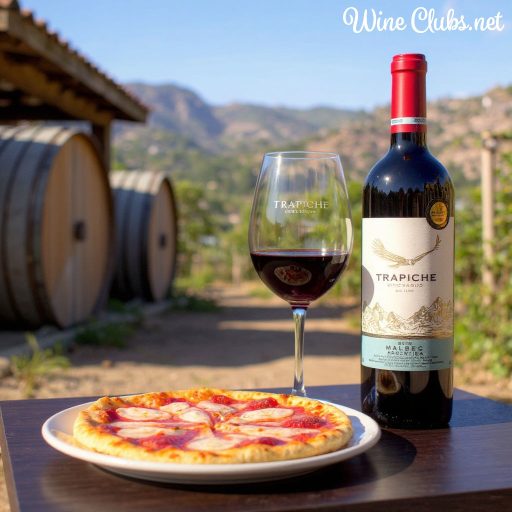
Trapiche Malbec – Quick Take
Rating: ⭐⭐⭐⭐½ (4.5/5)
Price: $7-10 per bottle
Best for: Malbec beginners, everyday drinking, anyone who wants legitimate wine quality without selling a kidney
Bottom Line: Trapiche Malbec is the overachiever of budget wines—delivering smooth, fruit-forward Argentine Malbec character at a price that makes you wonder if there’s been some kind of pricing error. At $8, this is the wine you buy by the case and feel smug about when guests ask what you’re serving.
How I Ended Up With Trapiche Malbec (The Origin Story)
Let me set the scene: I was at my local grocery store, staring at the wine aisle with the focused intensity of someone trying to decode ancient hieroglyphics. My mission was simple—find a decent Malbec that wouldn’t require taking out a small loan.
 I’d heard that Argentina makes killer Malbec, but I’d also heard that good wine costs money, and my budget was screaming “please not another $20 bottle this week.” Then I spotted Trapiche Malbec sitting there for $7.99 with a label that looked surprisingly legitimate for something cheaper than a fancy coffee.
The bottle claimed to be from Mendoza, Argentina—the Malbec motherland—and promised “notes of plum and blackberry.” I figured for eight bucks, the worst-case scenario was I’d discovered an excellent cooking wine. Best case? I’d found the wine equivalent of a designer dress at a thrift store.
Spoiler alert: This is the thrift store designer dress of Malbec.
In this review, I’ll tell you exactly what Trapiche Malbec tastes like, why it punches way above its weight class, who should buy it, and whether Argentina’s most popular Malbec export deserves its reputation or if we’ve all been collectively fooled by good marketing and attractive pricing. I drank this wine multiple times (for thoroughness, obviously) and even served it to unsuspecting friends to get their unbiased reactions.
What Is Trapiche Malbec? (The Technical Stuff)
Before we dive into the “does it taste good” part, here’s what you’re actually buying when you grab that yellow-labeled bottle:
Trapiche Malbec Specs:
- Type: Red wine, 100% Malbec (no blending shenanigans, just straight-up Malbec)
- Grape: Malbec (originally from France, perfected in Argentina, now Argentina’s signature grape)
- Region: Mendoza, Argentina (the Napa Valley of South America, except with better value)
- Alcohol: 13.5% (standard red wine territory, nothing scary)
- Price: $7-10 per bottle (yes, really—this is actual money, not Monopoly money)
- Sweetness Level: Dry (not sweet, but not aggressively tannic either—balanced)
- Age: Typically 1-2 years old when released (drink young and fresh)
- Oak: Minimal to no oak aging (keeps it fruit-forward and approachable)
- Where to Buy: Everywhere—grocery stores, Trader Joe’s, Target, wine shops, probably your local gas station
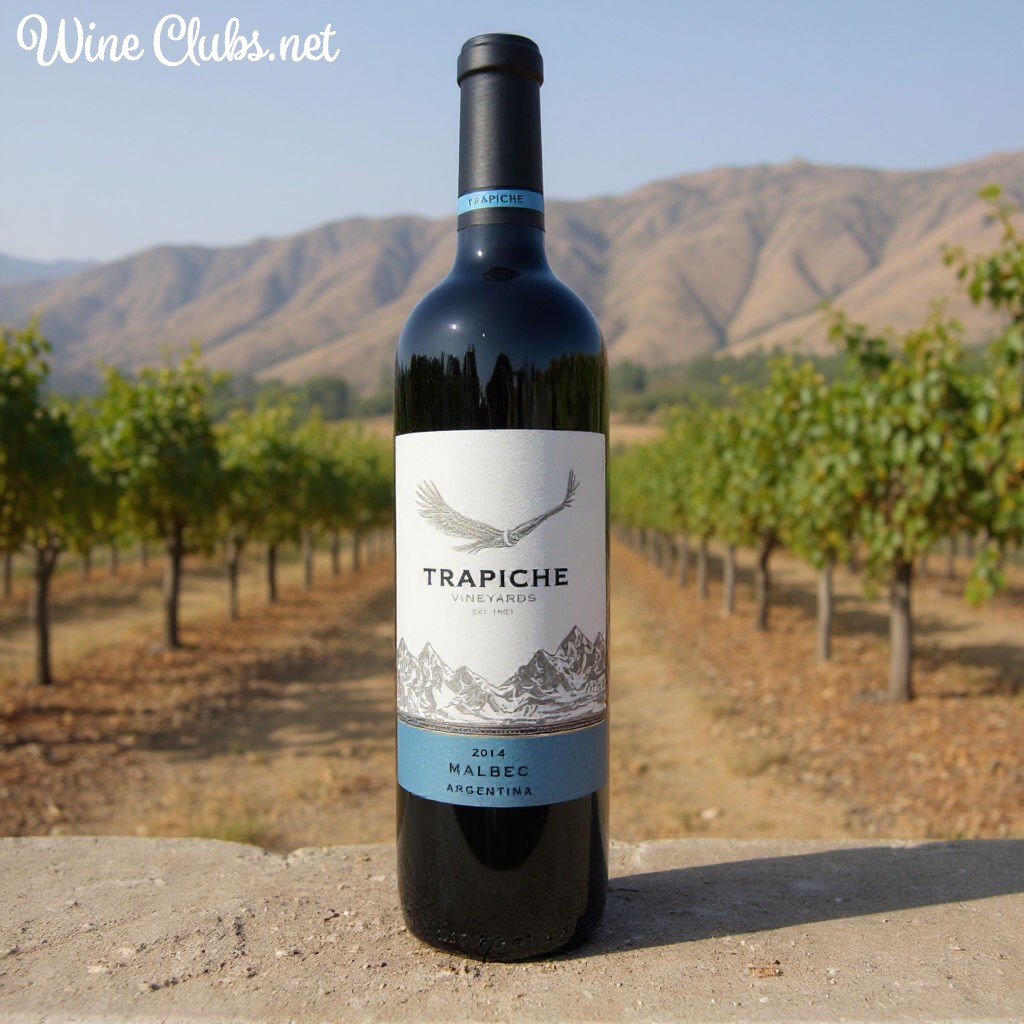
About Trapiche: Argentina’s Wine Overachiever
Quick history lesson (I’ll make it painless, I promise): Trapiche has been making wine in Argentina since 1883, which means they’ve had 140+ years to figure this out. They’re one of Argentina’s largest and most respected wineries, pioneering Malbec production when everyone else was still figuring out what to do with the grape that France had basically given up on.
Fun fact: Malbec was originally from Bordeaux, France, where it was a minor blending grape that nobody particularly cared about. Then Argentina said “hold my empanada” and turned Malbec into a world-class varietal that put Argentine wine on the map. Trapiche was instrumental in this transformation, and their entry-level Malbec is basically their way of saying “here’s what we can do for eight dollars—imagine what our expensive stuff tastes like.”
It’s working. I’m imagining.
The Bottle: Yellow Label, Big Expectations
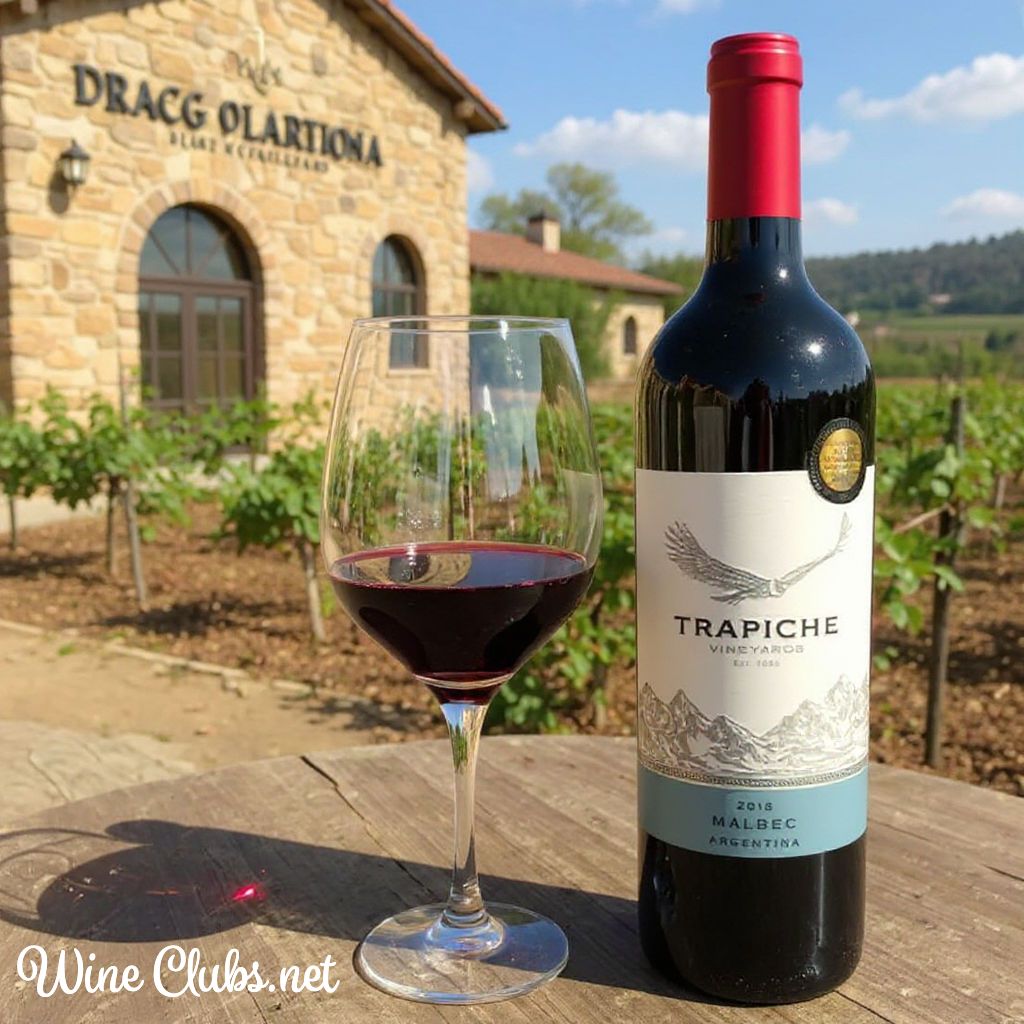
Trapiche Malbec comes in a standard wine bottle with a distinctive yellow label that’s easy to spot on crowded wine shelves. The label design is clean, professional, and refreshingly free of the gimmicky marketing nonsense you see on some budget wines (I’m looking at you, wines with pun names and cartoon animals).
The bottle itself screams “I’m a legitimate wine from a real winery” rather than “I cost seven dollars and might give you a headache.” This matters when you’re bringing wine to a dinner party and don’t want to look like you grabbed the cheapest thing you could find (even though you absolutely did).
In the glass: Trapiche Malbec is deep purple-ruby, almost opaque when held up to light. It’s the kind of dark, inky color that makes you think “this looks serious” before you remember you paid less for it than a sandwich. The wine shows medium legs when swirled, indicating decent body and alcohol without being heavy or syrupy.
Visual appeal: 9/10. This wine looks like it costs $20, not $8. Already winning.

What Does Trapiche Malbec Smell Like?
Time for the sniff test. I opened the bottle with moderate expectations—hoping for “pleasant” and “not vinegar-like”—and was immediately hit with aromas that made me double-check the price tag.
Aroma Profile:
- Dark fruit dominance: Plum and blackberry leading the charge, with dark cherry playing backup
- Subtle spice notes: A hint of black pepper and maybe some clove (classic Malbec characteristics)
- Cocoa undertones: Not chocolate exactly, but a gentle cocoa powder presence
- Earthy whispers: Very subtle earth and leather notes adding complexity
- Fresh fruit character: No oxidized or cooked fruit smells—everything smells bright and fresh
What Trapiche Malbec does NOT smell like: cheap wine. There’s no nail polish remover sharpness, no vinegar notes, no “oh god what did I buy” moments. Just clean, fruit-forward Malbec character that smells exactly like Malbec should smell.
Approachability factor: Very high. This smells inviting rather than intimidating—even wine newbies will stick their nose in the glass and think “yeah, I could drink this.”
The Taste Test: Does Trapiche Malbec Deliver?
Okay, moment of truth. I took my first sip of Trapiche Malbec expecting “fine for the price” and got “wait, why am I paying more for other wines?”
First Sip: “This Costs HOW MUCH?”
My immediate reaction was surprise. Not “this doesn’t suck” surprise, but genuine “this is actually good” surprise. At $8, you expect compromise. You expect to say things like “well, for the price…” or “it’s fine if you’re not picky.” Trapiche Malbec doesn’t give you that out—it just tastes good, period.
Flavor Profile (Real Talk Version):
Primary Flavors:
- Plum and blackberry explosion: Ripe, jammy dark fruit without being sweet—think fresh fruit, not fruit candy
- Black cherry notes: Tart dark cherry adding brightness and keeping things interesting
- Subtle cocoa: Gentle chocolate undertones, not overwhelming but definitely there
- Black pepper spice: A peppery kick on the mid-palate that’s classic Malbec
- Touch of vanilla: Very subtle, likely from minimal oak contact or oak alternatives
- Earthy finish: Light leather and earth notes on the finish adding sophistication
Sweetness Level: Dry. This is not a sweet wine—there’s no residual sugar making things syrupy or jammy. The fruit flavors are pronounced, which might read as “sweet” if you’re used to bone-dry Cabernet, but this is legitimately dry wine with ripe fruit character. Big difference.
Body: Medium to medium-full. It has presence in your mouth without being heavy. Substantial enough to pair with food, light enough to drink on its own without feeling like you just ate a steak.
Tannins: Smooth and well-integrated. Yes, there are tannins (this is red wine, after all), but they’re soft and friendly rather than harsh and drying. Your mouth doesn’t pucker; it just gets a pleasant, velvety texture. This is what good budget Malbec should feel like.
Acidity: Moderate. Enough acidity to keep the wine fresh and food-friendly without being tart or sharp. The acid balances the ripe fruit nicely, preventing the wine from feeling flat or cloying.
Finish: Medium length with lingering dark fruit and subtle spice. Nothing harsh or bitter—just a pleasant “that was nice, let’s have another sip” feeling. The finish is clean, which is crucial for budget wines (cheap wines often have weird aftertastes—this doesn’t).
The “Is This Actually Good or Am I Just Impressed By the Price?” Test
Here’s the thing about budget wines: sometimes you convince yourself they’re good because they’re cheap. “Well, for eight dollars…” becomes a crutch. So I did an experiment—I poured Trapiche Malbec for some friends without telling them the price and asked their honest opinion.
The results:
- Friend #1 (wine enthusiast): “This is solid. Fifteen bucks?” (Close! $8.)
- Friend #2 (casual drinker): “I like this better than that $18 Malbec we had last week.” (Same.)
- Friend #3 (wine skeptic): “Wait, I actually like this. Is this expensive?” (Nope!)
When I revealed the price, multiple jaws dropped. Friend #1 immediately Googled where to buy it in bulk. Friend #2 took a picture of the label. Friend #3 said “I’m switching to wine” (they usually drink beer).
Verdict: Trapiche Malbec is legitimately good, not just “good for the price.” The price just makes it borderline miraculous.

I Drank Trapiche Malbec Every Which Way (For Science)
Because I’m thorough (and because at $8 a bottle I could afford multiple experiments), I tried Trapiche Malbec in various scenarios to see how versatile it is:
Experiment 1: Solo Drinking While Cooking Dinner
The setup: Me, the kitchen, Trapiche Malbec, and a simple pasta dinner in progress.
The verdict: Excellent “cooking wine” in the sense that you drink it while cooking, not that you cook with it. Smooth enough to sip on its own without food. Fruit-forward character keeps things interesting without needing a meal to balance it. Disappeared faster than intended (whoops).
Experiment 2: With Dinner (Grilled Steak)
The setup: Classic grilled ribeye steak with chimichurri, roasted vegetables, because if you’re drinking Malbec with anything, it should be steak (it’s practically the law in Argentina).
The verdict: THIS IS WHAT MALBEC WAS BORN TO DO. The wine’s dark fruit and peppery notes complemented the grilled meat perfectly. The moderate tannins cut through the fat without overwhelming the steak. The wine held its own against the bold chimichurri flavors. This pairing was so good I’m slightly concerned I’ll never enjoy steak without Malbec again.
Experiment 3: Slightly Chilled (60-65°F)
The setup: Threw the bottle in the fridge for 15 minutes on a warm evening because sometimes you want red wine but it’s 85°F outside and room temperature wine sounds terrible.
The verdict: Works great! The slight chill didn’t mute the flavors—it actually made the wine more refreshing while maintaining the fruit character. This is a solid summer red wine option when you want red but don’t want something heavy and warm. The fruit pops even more when cold.
Experiment 4: Day 2 (After Opening)
The setup: I had half a bottle left, re-corked it, stuck it in the fridge overnight, brought it back to room temp the next day.
The verdict: Still good! No noticeable oxidation or flavor degradation. Actually, the wine seemed slightly more integrated—the tannins softened a bit, the flavors melded nicely. This wine has decent staying power after opening, which matters for people who don’t polish off entire bottles in one sitting (who are you people and how do you have such willpower?).
What to Eat With Trapiche Malbec (The Pairing Guide)
Trapiche Malbec is wonderfully versatile with food, mainly because the smooth tannins and fruit-forward character play well with lots of different flavors. Here’s what works:
Perfect Pairings (Tested and Approved):
- Grilled steak (ribeye, sirloin, flank): The classic pairing—dark fruit and tannins love grilled beef
- Burgers (especially with cheese and caramelized onions): Casual but perfect
- Chimichurri anything: Trapiche is Argentine, chimichurri is Argentine, this is destiny
- BBQ ribs or pulled pork: The fruit handles BBQ sauce surprisingly well
- Empanadas (beef or mushroom): Embrace the Argentine theme
- Mushroom dishes: The earthy notes in the wine complement earthy mushrooms beautifully
- Grilled vegetables (especially eggplant and peppers): Works great for vegetarian meals
- Hard cheeses (aged cheddar, manchego, parmesan): The tannins cut through cheese richness
- Dark chocolate (70%+ cacao): The cocoa notes in the wine mirror chocolate flavors
- Hearty stews and braises: The wine’s body stands up to rich, slow-cooked dishes
Skip These Pairings (Lessons Learned):
- Delicate fish: The wine overpowers anything subtle—save the sea bass for white wine
- Spicy Asian cuisine: The tannins clash with serious heat—go with off-dry whites instead
- Fresh salads with vinaigrette: The acidity in the dressing fights with the wine
- Super creamy pasta: Both the wine and dish are rich—together it’s too much
- Citrus-based dishes: The bright acidity clashes with the wine’s fruit character
Serving Tips for Maximum Enjoyment:
- Temperature: 60-65°F (slightly below room temperature). If your wine is warmer than this, the alcohol becomes more prominent and the fruit gets muddy
- Glassware: Any standard red wine glass works. Bigger is better for letting the wine breathe
- Decanting: Not necessary, but 15-20 minutes of air exposure helps open up the flavors
- When to drink: Now. This isn’t an aging wine—drink it within 1-2 years of vintage date
- Storage after opening: Re-cork and refrigerate. Good for 2-3 days, sometimes longer
The Brutal Honesty Section: Pros and Cons
Let’s talk about what Trapiche Malbec does brilliantly and where it shows its budget roots:
What I Loved (Pros):
- Insane value: $8 for legitimately good Malbec is borderline absurd
- Classic Malbec character: Tastes like what Malbec should taste like (plum, blackberry, pepper, earth)
- Smooth tannins: No harsh, drying tannins making you pucker—just velvety texture
- Food versatility: Pairs with everything from steak to empanadas to chocolate
- Available everywhere: No hunting specialty stores or waiting for shipments
- Tastes more expensive than it is: Friends consistently guess $15-20 price point
- No weird aftertaste: Clean finish without budget wine funkiness
- Good second day: Doesn’t fall apart after opening like some cheap wines
- Approachable for beginners: Smooth enough for wine newbies, interesting enough for enthusiasts
- Perfect everyday wine: Good enough to enjoy regularly without breaking the bank
- Legitimate winery: Real producer with 140+ years of winemaking history, not some private label nonsense
What Could Be Better (Cons):
- Limited complexity: It’s good, but it’s not “contemplate the layers of terroir” wine—it’s straightforward
- No aging potential: Drink young—this won’t improve over time
- Minimal oak: If you love oaky, vanilla-heavy wines, this might feel too fruit-forward
- Not for serious collectors: This is everyday drinking wine, not cellar-worthy bottles
- Medium intensity: Not a bold, powerful Malbec—if you want intensity, look at higher-end Argentine Malbecs
- Generic sometimes: Occasionally tastes a bit one-dimensional compared to pricier Malbecs with more complexity
- Vintage variation: Quality can vary slightly year to year (though it’s consistently good)
Real talk: The “cons” here are nitpicking. For $8, expecting complexity, aging potential, and profound terroir expression is ridiculous. Trapiche Malbec delivers exactly what it should at this price—delicious, approachable, well-made everyday Malbec. The fact that it has any cons at all is only because we’re comparing it to wines costing 3-5x as much.
Who Should Buy Trapiche Malbec? (The Decision Matrix)
Buy Trapiche Malbec If You:
- Want to try Malbec without spending $20+: This is the perfect entry point
- Need an everyday drinking wine: Quality good enough to enjoy regularly without guilt
- Love fruit-forward reds: Plum and blackberry flavors without excessive oak or tannins
- Pair wine with steak regularly: Trapiche + steak = happiness
- Appreciate good value: This might be the best quality-to-price ratio in wine
- Want smooth, easy-drinking reds: No harsh tannins or aggressive wine character
- Are hosting casual dinners: Good enough to impress, affordable enough to buy multiple bottles
- Like Argentine wines: Classic Mendoza Malbec character at budget price
- Want legitimate wine, not gimmicks: Real winery, real quality, no marketing nonsense
- Drink wine often: At $8, you can afford to drink this regularly without financial stress
Skip Trapiche Malbec If You:
- Only drink ultra-premium wines: This is good, but it’s not going to compete with $50+ Malbecs from top producers
- Want complex, age-worthy wines: Drink this young—it won’t develop in the cellar
- Prefer oaky, heavily-wooded wines: This is fruit-forward with minimal oak influence
- Seek powerful, intense Malbecs: This is medium-bodied and smooth, not bold and aggressive
- Want wines with serious pedigree: No single-vineyard terroir stories here, just solid everyday wine
- Collect wines for aging: This isn’t a collector’s wine—it’s a “drink and enjoy” wine
Bottom line: If you drink wine regularly and don’t have unlimited budget, Trapiche Malbec should be a staple. It’s the wine you buy by the case for weeknight dinners, casual gatherings, and times when you want legitimate quality without spending $20+ per bottle.
How Trapiche Malbec Compares to Other Malbecs
Since you’re probably wondering how Trapiche stacks up against other popular Malbecs:
Trapiche Malbec vs. Alamos Malbec
The comparison: Both are affordable Argentine Malbecs from respected producers, both around $9-11.
The difference: Alamos (made by Catena) is slightly more structured with firmer tannins and a bit more complexity. Trapiche is smoother and more fruit-forward. Alamos feels slightly more “serious,” Trapiche feels more approachable.
Which to choose: If you want smooth and easy-drinking, go Trapiche. If you want a bit more structure and complexity, try Alamos. Both are excellent values—honestly, buy both and decide yourself.
Trapiche Malbec vs. Gascon Malbec
The comparison: Similar price point ($8-10), both widely available Argentine Malbecs.
The difference: Gascon tends to be slightly bolder and more full-bodied with more pronounced tannins. Trapiche is smoother and more balanced. Gascon sometimes shows more oak influence, Trapiche is more fruit-focused.
Which to choose: Want bold and powerful? Gascon. Want smooth and balanced? Trapiche. Both are solid budget Malbecs.
Trapiche Malbec vs. Catena Malbec
The comparison: Both from Argentina, but Catena costs $15-20 vs. Trapiche’s $8.
The difference: Catena shows more complexity, better structure, more refined tannins, and greater aging potential. You’re paying double the price for noticeable quality improvements. That said, Trapiche holds its own remarkably well—the quality gap is smaller than the price gap suggests.
Which to choose: For everyday drinking, Trapiche is smarter value. For special occasions or when you want more complexity, Catena is worth the splurge. I keep both in my wine rack for different purposes.
Trapiche Malbec vs. Layer Cake Malbec
The comparison: Layer Cake costs $15-18, double Trapiche’s price.
The difference: Layer Cake is richer, more concentrated, more overtly fruity (some say too fruity), and shows more oak influence. It’s bolder and more “in your face.” Trapiche is more restrained, balanced, and classic in style.
Which to choose: If you want big, bold, fruit-bomb Malbec, Layer Cake delivers. If you want classic, balanced Malbec at half the price, Trapiche wins. Personally, I prefer Trapiche—Layer Cake can be too much.
Frequently Asked Questions About Trapiche Malbec
Q: Is Trapiche Malbec sweet or dry?
A: Dry. Trapiche Malbec is a dry red wine with no residual sugar. The pronounced fruit flavors (plum, blackberry) might make it seem “fruity,” but it’s not sweet—just fruit-forward. If you’re used to bone-dry Cabernet, the ripe fruit might register as slightly sweet by comparison, but this is legitimately dry wine.
Q: What does Trapiche Malbec taste like?
A: Plum, blackberry, dark cherry, black pepper, subtle cocoa, and light earthy notes. It’s fruit-forward with smooth tannins and moderate acidity. Think ripe dark fruit with a peppery kick and velvety texture. Classic Malbec character without being overly bold or aggressive.
Q: How much does Trapiche Malbec cost?
A: $7-10 per bottle at most stores. Grocery stores and Trader Joe’s often have it for $7.99-8.99. Wine shops might charge $9-10. Occasionally goes on sale for $6-7 (buy multiple bottles when this happens). This is exceptional value for the quality.
Q: Where is Trapiche Malbec from?
A: Mendoza, Argentina—the world’s premier Malbec-producing region. Mendoza is located at the base of the Andes Mountains, where high altitude, sunny days, cool nights, and rocky soils create ideal conditions for Malbec. Trapiche has been making wine in Mendoza since 1883.
Q: What food pairs with Trapiche Malbec?
A: STEAK. Seriously, Trapiche + grilled steak is one of the great wine pairings in life. Also excellent with burgers, BBQ, empanadas, grilled vegetables, mushroom dishes, hard cheeses, and dark chocolate. The smooth tannins and fruit-forward character make it versatile with many foods.
Q: Is Trapiche Malbec good quality?
A: Yes! Trapiche Malbec is legitimately good wine, not just “good for the price.” It’s made by one of Argentina’s oldest and most respected wineries (since 1883), shows classic Malbec character, has smooth tannins and clean flavors, and consistently delivers quality. At $8, it’s arguably the best value in Argentine Malbec.
Q: Should I decant Trapiche Malbec?
A: Not necessary, but it helps. Trapiche Malbec is smooth enough to drink immediately after opening, but 15-20 minutes of air exposure (either in a decanter or just in your glass) opens up the flavors and softens the tannins slightly. If you’re impatient (guilty), just pour and drink—it’s still good.
Q: How long does Trapiche Malbec last after opening?
A: 2-3 days if re-corked and refrigerated, sometimes up to 4-5 days. The wine holds up well after opening—flavors stay fresh and tannins remain smooth. Bring it back to room temperature (or close to it) before drinking leftover wine from the fridge.
Q: Can I age Trapiche Malbec?
A: No. Trapiche Malbec is made for drinking young—within 1-2 years of the vintage date. It won’t improve with age and might actually decline after 3-4 years. This is an “enjoy now” wine, not a cellaring wine. Buy it, drink it, enjoy it. Don’t save it for later.
Q: Is Trapiche Malbec good for beginners?
A: Absolutely! Trapiche Malbec is one of the best beginner red wines. It’s smooth (no harsh tannins), fruit-forward (easy to understand flavors), affordable (low financial risk to try), widely available (easy to find), and food-friendly (pairs with lots of things). Perfect introduction to both Malbec and Argentine wine.
Q: What’s the alcohol content of Trapiche Malbec?
A: 13.5% alcohol by volume. This is standard for red wine—not particularly high or low. You won’t get overwhelmed by alcohol heat, but it’s substantial enough to have presence. Perfectly balanced for everyday drinking.
Q: Where can I buy Trapiche Malbec?
A: Everywhere. Literally everywhere. Grocery stores (Kroger, Safeway, Publix), Trader Joe’s ($7.99 usually), Target, Walmart, Total Wine, BevMo, wine specialty shops, and online through wine delivery services. Trapiche is one of the most widely distributed Argentine wines in the US—you should have no trouble finding it.
Q: Is Trapiche Malbec organic or vegan?
A: Trapiche Malbec is not certified organic or vegan. Some winemaking processes may use animal-derived fining agents. If this matters to you, check with the winery directly or look for wines with organic/vegan certifications on the label.
Q: What’s the difference between Trapiche and Trapiche Reserve?
A: Trapiche makes multiple tiers. The standard yellow-label Trapiche Malbec (reviewed here) is the entry-level bottle ($8-10). Trapiche Reserve costs more ($12-15) and offers more complexity, better structure, and oak aging. There are also premium tiers (Single Vineyard, Iscay) costing $20-40+ for serious Malbec with aging potential. The standard Trapiche is the best everyday value.
Where to Buy Trapiche Malbec (Shopping Guide)
Trapiche Malbec’s popularity means you can find it almost anywhere wine is sold. Here’s where to look and what to pay:
Best Places to Buy:
- Trader Joe’s: $7.99 consistently (often the cheapest option)
- Grocery stores: $8.99-9.99 (Kroger, Safeway, Publix, regional chains)
- Target: $8.99-9.99 (convenient if you’re there anyway)
- Walmart: $7.99-8.99 (competitive pricing)
- Total Wine & More: $8.99-9.99 (larger selection of Trapiche varieties)
- BevMo: $9-10 (slightly higher but good availability)
- Wine specialty shops: $9-12 (may charge premium, but convenient)
- Costco: Sometimes available in multi-packs at good per-bottle pricing
- Online delivery: Drizly, Instacart, wine.com (expect delivery fees)
Smart Shopping Tips:
- Don’t pay more than $10: If someone’s charging $12+, they’re overcharging—find another store
- Look for sales: Trapiche frequently goes on sale for $6-7, especially around holidays—stock up!
- Buy by the case: Many stores offer 10-15% off when you buy 12 bottles—worth it at this price
- Check vintage date: Buy the most recent vintage available (2021-2023 as of 2025)—fresher is better for this wine
- Try the upgrade: If you love standard Trapiche, try Trapiche Reserve ($12-15) for comparison—it’s good too
- Trader Joe’s is usually cheapest: If you have access to TJ’s, that’s your best bet for consistent $7.99 pricing
Final Verdict: Is Trapiche Malbec Worth Buying?
Rating: ⭐⭐⭐⭐½ (4.5 out of 5 stars)
Here’s the unvarnished truth: Trapiche Malbec is one of the best values in wine, period. Not just in Argentine Malbec. Not just in budget reds. In wine, full stop.
At $8, this wine delivers classic Malbec character—plum, blackberry, pepper, earth—with smooth tannins, balanced acidity, and clean flavors that taste more like a $15-20 bottle than something you grabbed next to the toilet paper at Target. It pairs beautifully with steak and burgers, drinks nicely on its own, and impresses guests who would never guess you paid eight dollars for it.
Is it the best Malbec ever made? No. Will it revolutionize your understanding of wine? Probably not. But will it deliver delicious, satisfying, legitimate wine quality at a price that makes you wonder if there’s been some kind of pricing error? Absolutely.
Buy Trapiche Malbec if you want:
- Legitimately good Malbec without spending $20+
- An everyday drinking wine you can afford to enjoy regularly
- The perfect steak wine that won’t break the bank
- Classic Argentine Malbec character (plum, blackberry, pepper)
- Smooth, approachable red wine for beginners or enthusiasts
- Exceptional quality-to-price ratio (possibly the best in wine)
- A wine you can serve to guests without embarrassment despite costing $8
Skip Trapiche Malbec if you:
- Only drink ultra-premium wines and turn your nose up at budget bottles
- Want complex, age-worthy Malbec for your cellar (try Catena or Achaval-Ferrer instead)
- Prefer bold, powerful, intensely-oaked Malbecs (look at Layer Cake or higher-end options)
- Seek wines with serious single-vineyard pedigree and terroir stories
- Need wines to impress serious wine collectors (this is everyday drinking wine, not collector wine)
The Bottom Line:
Trapiche Malbec is what happens when a legitimate, 140-year-old winery with serious winemaking expertise decides to make affordable wine accessible to everyone. It’s not dumbed-down or compromised—it’s just well-made Malbec without the premium pricing attached to boutique producers and fancy marketing.
At $8, this should be a staple in your wine rotation. Buy it by the case. Drink it with weeknight dinners. Serve it at casual gatherings. Pair it with grilled steak. Keep several bottles on hand for when you want legitimate wine quality without thinking about the cost.
And when your friends ask what you’re drinking and compliment the wine, feel free to casually mention it cost eight dollars and watch their faces. That never gets old.
Trapiche Malbec: Proof that you don’t need to spend a fortune to drink well. Eight dollars of Argentine excellence in a bottle with a yellow label. Stock up accordingly. 🍷
More Malbec Reviews You Might Like
If you enjoyed this Trapiche Malbec review, check out these other wine reviews:
- Alamos Malbec Review – Another excellent budget Argentine Malbec worth trying
- Gascon Malbec Review – Bold alternative in the same price range
- Catena Malbec Review – The premium upgrade if you love Trapiche and want more complexity
- Best Malbecs Under $15 – Complete guide to affordable Argentine Malbecs
- Malbec vs. Cabernet Sauvignon – Understanding the difference between these popular reds
Love discovering great wines? Check out our Best Wine Clubs guide for subscriptions delivering wines like Trapiche to your door!