
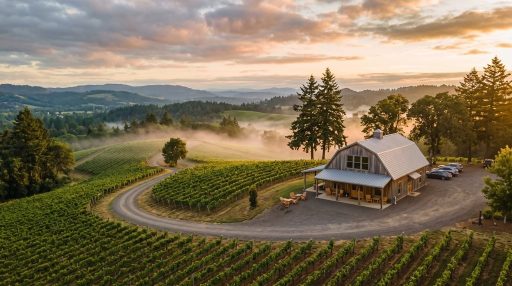
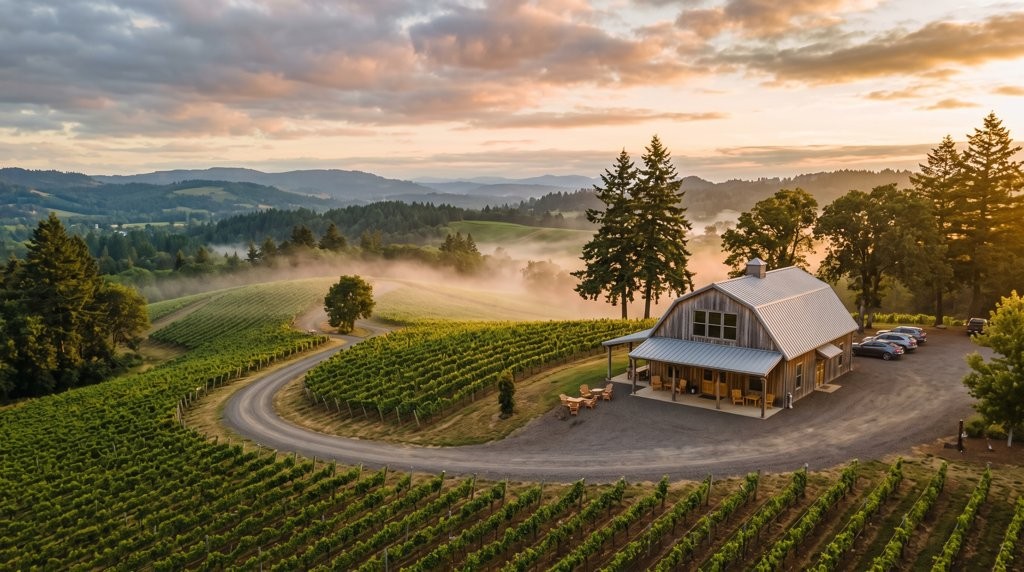
Oregon has built one of the most respected Pinot Noir reputations in the world, but the state’s wine country is bigger and more varied than that single grape suggests. As of 2025, Oregon is home to 23 federally recognized AVAs spread across roughly six principal winegrowing regions, from the cool, marine-influenced hills of the Willamette Valley to the warmer, drier vineyards of Southern Oregon and the high-desert edges near Idaho. We’re visiting Oregon wineries region by region, and this page is where we’ll track everywhere we go.
Region Overview | Wine Regions of Oregon | Oregon’s AVAs | Visiting Tips | FAQ | Own an Oregon Winery?

Region Overview
Most of Oregon’s wine reputation was built in the Willamette Valley, just south of Portland, where a cool, marine-influenced climate turned out to be nearly perfect for Pinot Noir — Oregon’s answer to Burgundy, right down to some winemakers training there directly. The valley has since been carved into more than a dozen nested sub-AVAs as growers identified meaningfully different soils and microclimates within it, each with its own name and personality.
South of the Willamette Valley, Southern Oregon’s Rogue and Umpqua Valleys run warmer and drier, supporting a much wider range of grapes — Syrah, Tempranillo, and other varieties that would struggle further north. And along Oregon’s borders, a handful of AVAs are shared with neighboring states: the Columbia Gorge and Columbia Valley with Washington, and the Snake River Valley with Idaho.
Wine Regions of Oregon
McMinnville Wineries
A small, boutique sub-AVA in the Willamette Valley’s Coast Range foothills, known for distinctive marine sedimentary soils and hands-on, small-production Pinot Noir. We’re actively visiting wineries in this region — see our current writeups and reviews.
Explore McMinnville Wineries →
Willamette Valley (Broader Region)
Coming soon. Oregon’s flagship wine region and the heart of American Pinot Noir, home to more than a dozen nested sub-AVAs beyond McMinnville, including Dundee Hills, Yamhill-Carlton, and Ribbon Ridge.
Southern Oregon (Rogue & Umpqua Valleys)
Coming soon. Warmer, drier wine country south of the Willamette Valley, known for a wider range of grape varieties than Oregon’s Pinot-dominated north.
Columbia Gorge & Columbia Valley
Coming soon. Dramatic, wind-swept wine country along the Columbia River, shared with Washington State.
Oregon’s AVAs
Oregon has 23 federally recognized AVAs, more than all but a handful of states — and the vast majority of that count comes from just how finely the Willamette Valley has been subdivided. Within the Willamette Valley AVA (established 1983) sit 11 nested sub-AVAs, including:
- McMinnville AVA — the region we’re currently covering, known for elevation-defined marine sedimentary soils
- Dundee Hills, Yamhill-Carlton, Ribbon Ridge, Chehalem Mountains, Eola-Amity Hills — some of the valley’s best-known and most planted sub-AVAs
- Van Duzer Corridor, Laurelwood District, Tualatin Hills, Lower Long Tom, Mount Pisgah (Polk County) — newer, smaller sub-AVAs recognized between 2018 and 2022
Outside the Willamette Valley, Oregon’s other AVAs cluster into a few groups: Southern Oregon (itself an AVA, containing Rogue Valley, Applegate Valley, Umpqua Valley, Elkton Oregon, and Red Hill Douglas County), and a set of AVAs shared with neighboring states — Columbia Gorge and Columbia Valley with Washington, Walla Walla Valley and The Rocks District of Milton-Freewater on Oregon’s side of that same border region, and Snake River Valley with Idaho.
Visiting Oregon Wineries
Expect small and personal, especially off the beaten path: Outside the biggest-name Willamette Valley estates, many Oregon wineries are genuinely small, hands-on operations — sometimes with limited public hours or visits by appointment only.
Layer your trip by sub-AVA: The Willamette Valley’s sub-appellations sit close enough together that you can taste several distinct terroirs in a single day without much driving.
Ask what’s grown where: Pinot Noir dominates the north, but Southern Oregon supports a genuinely different lineup of grapes — know which style you’re chasing before you plan a route.
Check for direct-order options: Some smaller producers focus more on mail order and allocation lists than walk-in tastings — worth asking about if a visit isn’t practical.
FAQ
How many AVAs does Oregon have?
23, as of 2025 — more than nearly every other state except California and Washington.
What is Oregon’s most famous wine region?
The Willamette Valley, particularly for Pinot Noir. It contains 11 nested sub-AVAs, including McMinnville, Dundee Hills, and Yamhill-Carlton.
What wine is Oregon known for?
Pinot Noir above all, especially from the Willamette Valley, though Southern Oregon produces a much wider range of varieties including Syrah and Tempranillo thanks to its warmer climate.
Does Oregon share any AVAs with other states?
Yes — the Columbia Gorge and Columbia Valley AVAs are shared with Washington, and the Snake River Valley AVA is shared with Idaho.
Own an Oregon Winery?
We’re building this guide region by region and always looking for the next stop. If you run a winery in Oregon, get in touch — we’d love to come taste what you’re pouring.
Looking for wine delivered instead? Browse our full Best Wine Clubs guide to find your perfect match.